
Montessori School: What It Is and How to Choose One
What families should look for in a Montessori classroom, from trained guides and purposeful materials to boundaries, inclusion, and progress.
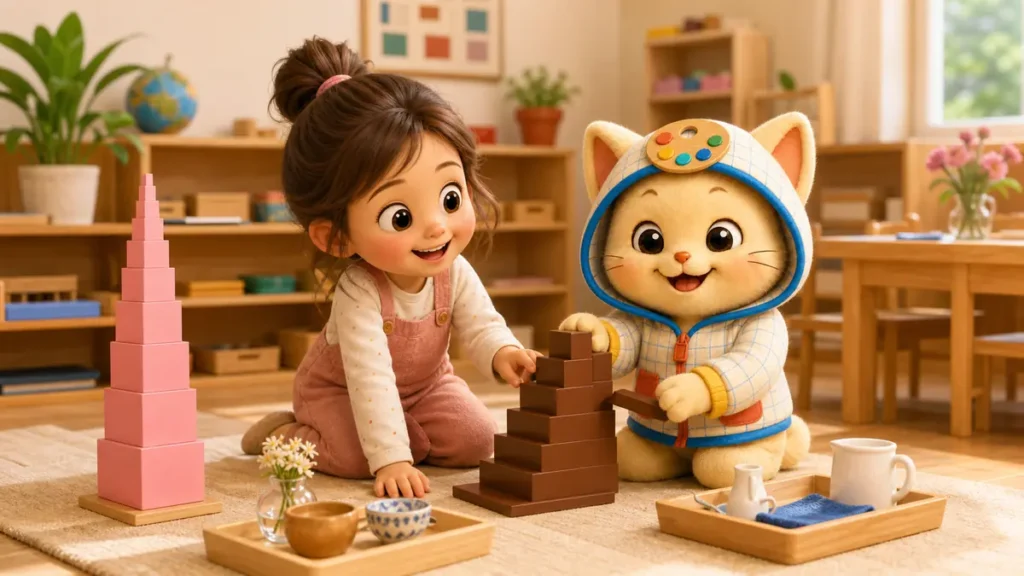
Choosing a school brings a tableful of questions. Will my child feel secure? Will learning move at an appropriate pace? Are expectations and boundaries clear? And how can a family tell whether a school using the Montessori name follows the approach in daily practice?
Kiwi and Victoria invite families to look beyond the label and observe what really happens in the classroom.
What is a Montessori school?
A Montessori environment organizes learning around children’s development. The room is prepared so students can move purposefully, choose suitable work, handle concrete materials, and build independence within known limits. The adult remains essential: observing, presenting lessons, protecting concentration, and adjusting support.
Freedom in Montessori does not mean “anything goes.” Choice lives inside a respectful community with responsibilities and boundaries.
What an authentic classroom may look like
- A prepared environment: accessible furniture, orderly shelves, and complete materials.
- Purposeful materials: hands-on work that isolates skills and often lets children notice an error themselves.
- Choice with limits: children select from work they have been shown and learn to return it carefully.
- Long work periods: fewer unnecessary interruptions give concentration time to grow.
- Mixed-age communities: nearby ages learn at different rhythms and can help one another.
- An observant guide: the adult demonstrates clearly and intervenes thoughtfully instead of solving everything.
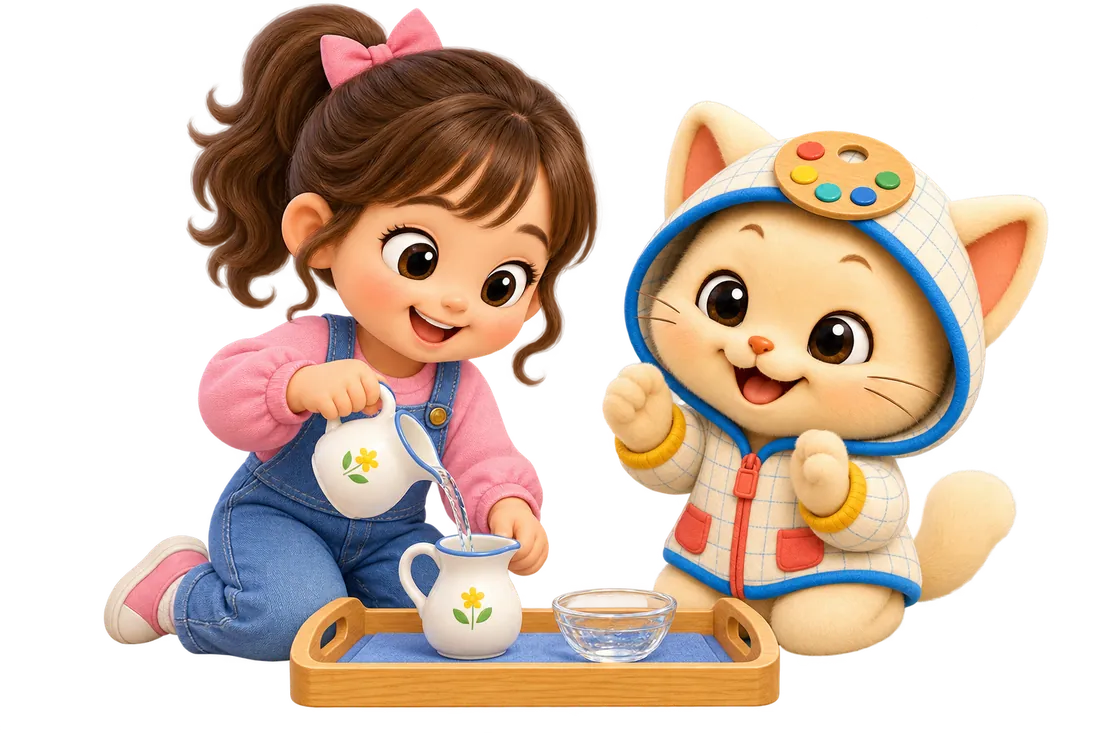
- Practical life: pouring water, cleaning a spill, preparing food, and caring for shared space are meaningful work.
What children practise
Montessori education includes language, mathematics, culture, sensory exploration, and practical life. Repeating a task and caring for the environment can strengthen concentration, coordination, confidence, independence, and social responsibility. Concrete experience gradually supports more abstract thinking.
Benefits—and questions worth asking
Families often value hands-on learning, respect for individual pace, and sustained attention. Yet the school experience depends on guide training, consistency across classrooms, communication, inclusion, and how progress is documented. Two schools using the Montessori name can work very differently.
A ten-point visit checklist
- Ask what Montessori training each guide has for the age group.
- Look for complete, cared-for, age-appropriate materials.
- Observe the tone and respect between adults and children.
- Ask how long the uninterrupted work cycle lasts.
- Learn how academic, social, and emotional progress is recorded.
- Ask how safety, limits, and conflict are handled.
- Discuss inclusion, specialist support, and accommodations.
- Clarify family communication and the settling-in period.
- Confirm practical details: ratios, schedule, cost, meals, transport, and later stages.
- Listen to your child’s response to the environment.
Montessori-inspired ideas at home
Home does not need to become a classroom. Place a few safe everyday objects within reach, invite children into real household tasks, offer two acceptable choices, demonstrate slowly, and allow time to try. The goal is participation—not racing toward milestones.
Kiwi and Victoria visit a Montessori classroom
In this educational adventure, a runaway materials cart creates a problem that can only be solved with observation, teamwork, and responsible independence.

How progress is observed
A Montessori classroom may use fewer whole-group tests, but progress should never be invisible. Guides observe choices, lessons completed, repetition, independence, and emerging skills. Ask how those observations are recorded, how families receive updates, and what happens when a child avoids one area or needs additional support.
Questions to ask before enrolling
- What does Montessori mean here on an ordinary day?
- What training does the lead guide hold for this age group?
- How are freedom, boundaries, and conflict balanced?
- How does the school support literacy and mathematics?
- What inclusion resources and specialist support are available?
- How does transition to another educational stage work?
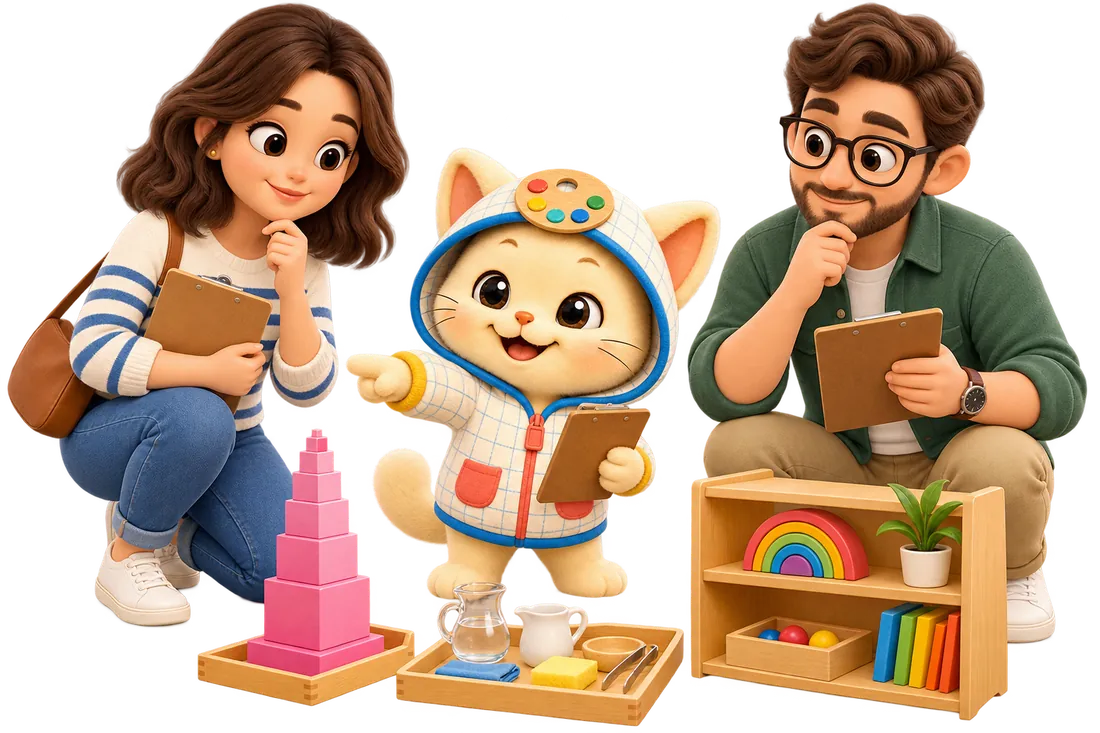
Explore the classroom with Kiwi
Watch the story together, then ask what Kiwi and Victoria managed to do independently.
How to interpret what you observe
A peaceful-looking room is not enough. Notice whether children can locate materials independently, whether the guide’s interventions are brief and respectful, and whether expectations are understandable. Ask for real examples of what happens when a child repeatedly avoids an area, interrupts another child’s work, or needs a different way to access an activity.
Connect school questions with family life
You do not need to reproduce a classroom at home. Accessible everyday tools, participation in real tasks, limited choices, and enough time to attempt a step can support independence naturally. Continue with our media guide for ages 2–5, open the Montessori video page, or browse more children’s stories in English.
Sources and further guidance
- Association Montessori Internationale: Montessori environments.
- Association Montessori Internationale: what makes Montessori Montessori?.
- Association Montessori Internationale: what to look for in a Montessori school.
Ask for concrete examples and observe practice wherever possible. No educational model is a universal fit; the school’s quality and the child’s needs matter as much as the philosophy’s name.