
Earthquake Safety for Kids: A Calm Family Guide
A practical family guide to preparing for an earthquake and protecting children at home, outdoors, in a car, or near the coast.
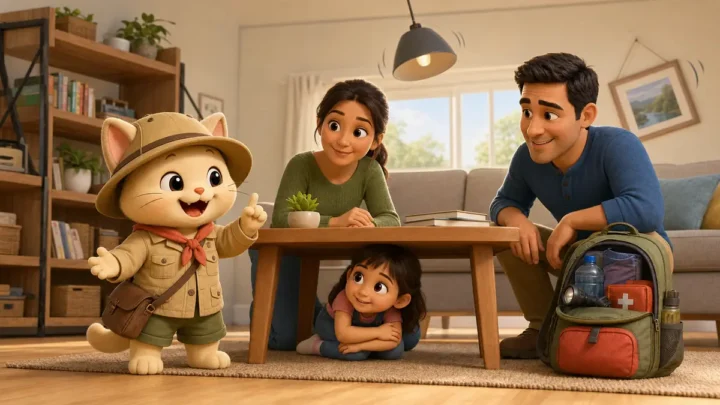
The YouTube player loads only after you press play.
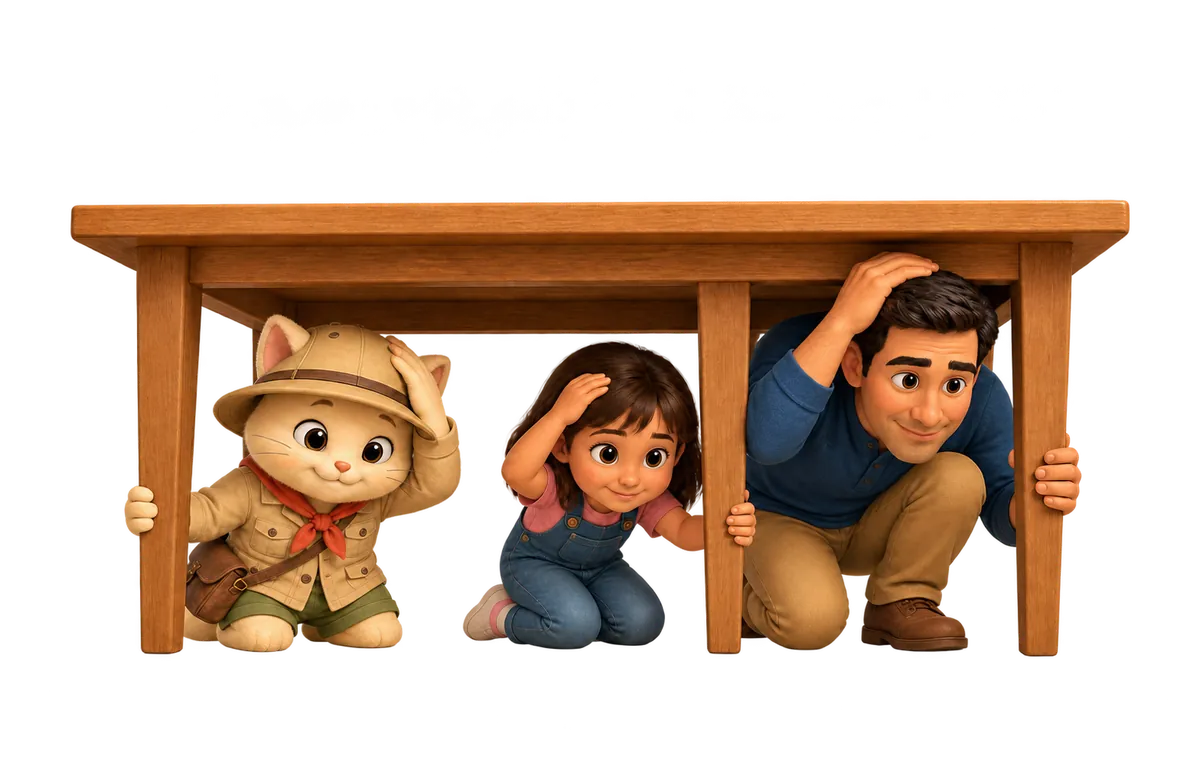
If an earthquake starts, drop to your hands and knees, cover your head and neck under a sturdy table if one is nearby, and hold on until the shaking stops. Keep children close when you can do so safely, stay away from windows, and do not run outside while objects are moving.
Kiwi’s family plan covers what to do before, during, and after an earthquake without frightening young children.
Watch Kiwi’s earthquake safety video for kids
Kiwi’s new educational video shows the three essential actions—drop, cover, and hold on—in a calm, memorable story for young children. Watch it at the top of this guide, then practise the family plan together.
Kiwi’s rule: protect yourselves first, check for injuries second, and follow local authorities. Local emergency guidance always takes priority.
Drop, cover, and hold on
Drop
Get onto hands and knees so the movement is less likely to knock you down.
Cover
Protect the head and neck. Shelter beneath a sturdy table or beside an interior wall away from glass.
Hold on
Hold a table leg and move with it. Without cover, stay low and protect your head with your arms.
Prepare without creating fear
Explain that the ground can sometimes shake and families practise just as they practise fastening a seat belt. Identify safer places, secure tall furniture, agree on meeting points, choose an out-of-area contact, and learn the school’s reunification plan.
Build a family emergency kit
Follow the recommendations for your area. Common supplies include water, long-lasting food, regular medication, a first-aid kit, flashlight, radio, batteries, a power bank, copies of important documents, and contact details. Add diapers, infant food, a change of clothes, and one small comfort object when needed.
What to do in different places
- Inside: stay inside during the shaking, away from windows and tall furniture. Do not use elevators.
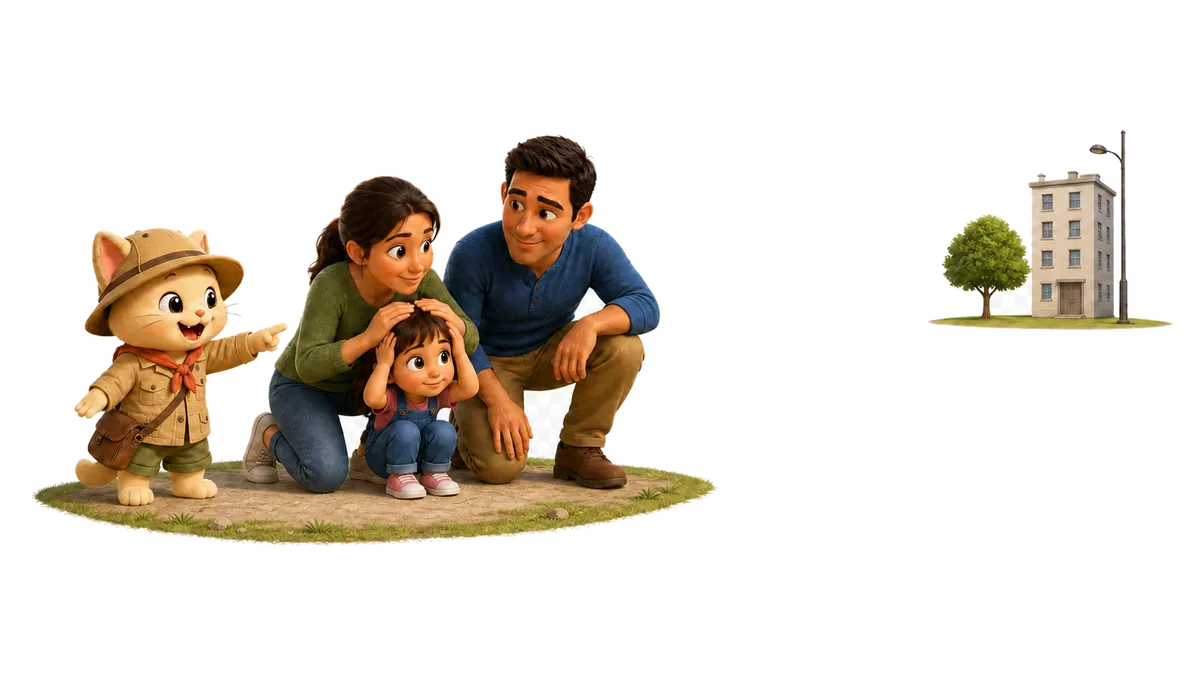
- Outside: move away from buildings, glass, trees, poles, and overhead wires; protect the child’s head.
- In a car: stop gradually in a safe place, apply the parking brake, and keep seat belts fastened.
- In a crowded place: do not rush the doors. Protect yourselves, then follow staff and marked exits after the shaking.
Near the coast: remember tsunami risk
Protect yourselves during the earthquake. After strong or long shaking, move immediately to higher ground or inland along evacuation routes. A sudden sea-level change or a loud ocean roar can also be a natural warning. Do not go to the shore to watch and do not return until authorities say it is safe.
After the shaking
- Check for injuries and immediate danger.
- Put on closed shoes to protect feet from broken glass.
- Leave by stairs if the building is damaged or authorities order an evacuation.
- Expect aftershocks and repeat drop, cover, and hold on.
- Use short text messages when networks are busy and rely on official information.
Help children feel safe again
Use calm, honest words: “The ground moved, and now we are checking that this place is safe.” Restore familiar routines when possible, limit repeated distressing news, and let children talk, draw, or play through the experience. Seek professional support if intense fear or behavior changes continue and interfere with daily life.
A ten-minute family drill
- Identify a sturdy table and two safer spots.
- Practise drop, cover, and hold on without shouting or running.
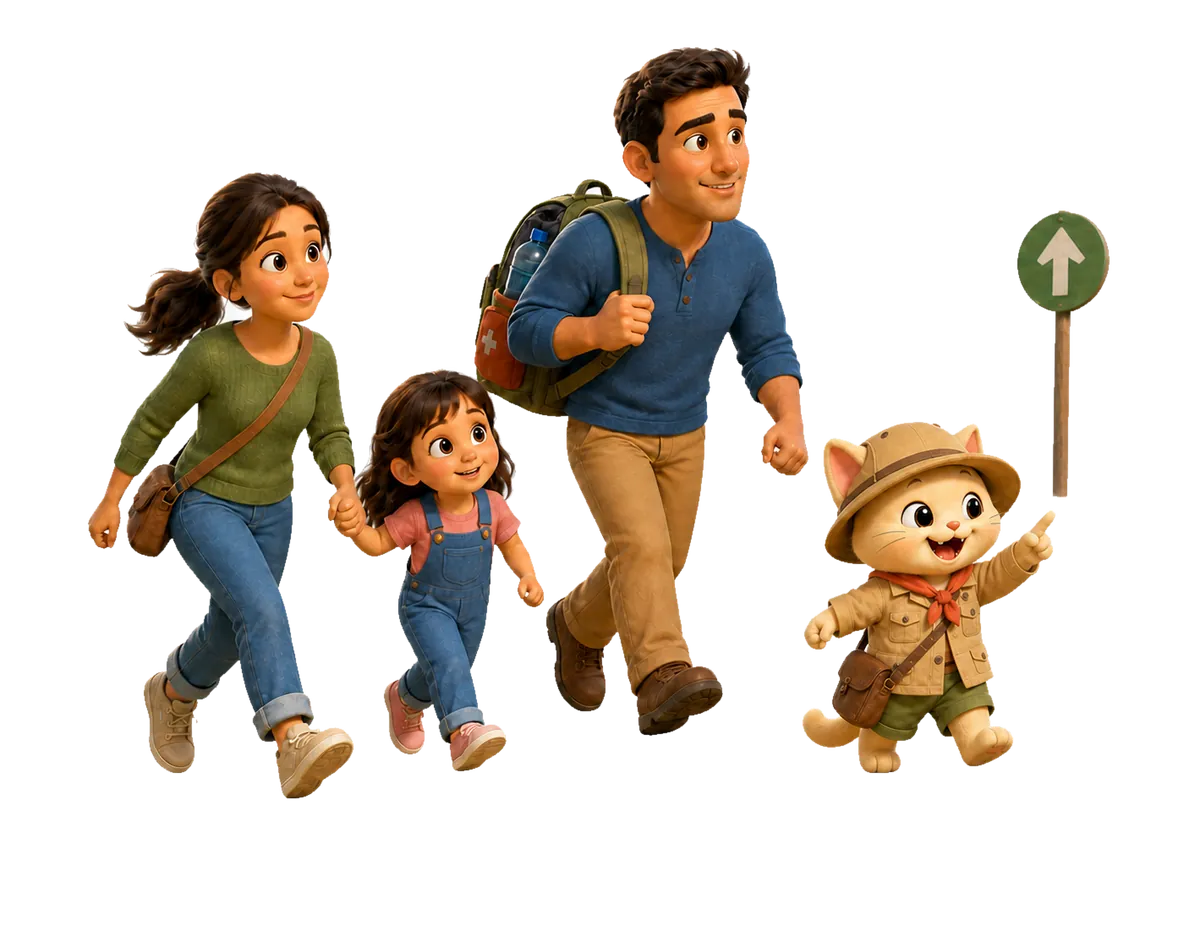
- Walk to the nearby meeting point.
- Locate the emergency kit and name the out-of-area contact.
- Let the child explain the plan.
Common questions
Should we run outside?
Usually not while the ground is shaking. Protect yourselves first.
Is a doorway safest?
A sturdy table generally offers better protection from falling objects.
Can earthquakes be predicted?
No method reliably predicts the exact place, time, and size.
What if my child is at school?
Follow the school’s reunification plan and official messages.
Practise your plan today
Choose safe places, name a meeting point, and rehearse the three protective actions calmly.
Make the plan specific to your home
Walk through each room at a child’s eye level. Note windows, tall shelves, hanging objects, and heavy items that could fall. Choose shelter locations where the family spends most time. Write down a nearby meeting point, an alternative outside the neighborhood, and the people authorized to collect each child.
Use official alerts, not rumors
Procedures differ by country and region. Save the website and alert service of your local emergency-management authority before an event. After an earthquake, follow official evacuation instructions and avoid forwarding unverified messages. Families can revisit safety through calm storytelling and then choose a quieter activity from Kiwi’s stories or printable coloring pages.
Official sources and further guidance
- Ready.gov: earthquakes—before, during, and after.
- U.S. Geological Survey: what to do during an earthquake.
- U.S. National Weather Service: tsunami safety.
- UNICEF Parenting: supporting children in emergencies.
This is general educational guidance. Building risks and evacuation routes vary; follow your local emergency-management agency.