
Dinosaurs for Kids: A Friendly Guide for Young Explorers
Discover when dinosaurs lived, what they ate, how fossils reveal their world, and why birds are living dinosaurs.
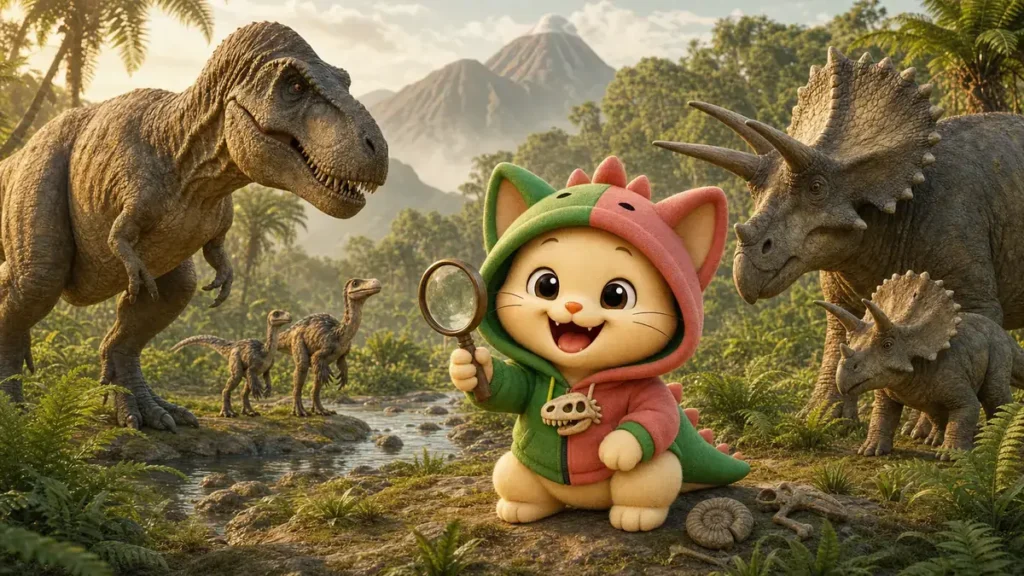
Dinosaurs were a wonderfully varied group of reptiles that lived millions of years ago. Some were feathered and light; others were enormous. They did not all live at the same time, and “dinosaur” does not simply mean any giant prehistoric animal.
Put on your explorer hat with Kiwi and meet the clues scientists use to rebuild their world.
What made a dinosaur a dinosaur?
Dinosaurs belonged to the archosaur family. A key feature was the way their legs stood beneath the body instead of spreading out to the sides like those of many modern lizards. Within that group were two-legged hunters, four-legged plant eaters, armored species, animals with horns and crests, and many dinosaurs with feathers.
When did dinosaurs live?
Triassic
About 252–201 million years ago. The earliest dinosaurs appeared while the continents formed Pangaea.
Jurassic
About 201–145 million years ago. Giant long-necked herbivores spread, and early birds appeared.
Cretaceous
About 145–66 million years ago. Triceratops, Velociraptor, and Tyrannosaurus rex lived during this period.
Stegosaurus was already ancient history by the time T. rex appeared. That is why putting every famous species in one scene is fun fiction, not a picture of one real ecosystem.
What did they eat?
Teeth, jaws, wear marks, fossilized stomach contents, and even fossil droppings offer clues. Herbivores cut or ground plants, carnivorous theropods ate other animals, and some species may have eaten a varied omnivorous diet.
Six famous dinosaurs
- Tyrannosaurus rex: a powerful Late Cretaceous predator with thick teeth and a strong tail.
- Triceratops: a four-legged herbivore with a beak, three horns, and a broad frill.
- Stegosaurus: a Jurassic plant eater with back plates and a spiked tail.
- Brachiosaurus: a long-necked giant whose front legs were longer than its back legs.
- Velociraptor: much smaller than its movie version and covered in feathers.
- Parasaurolophus: a herbivore with a long, hollow head crest that may have helped produce sounds.
How do we know what they looked like?
A fossil is a clue, not a complete photograph. Bones reveal shape and movement; footprints record behavior; skin and feather impressions preserve the outside of the body; rocks and fossil pollen describe the environment. Scientific reconstructions change when better evidence appears—and changing an idea is exactly how science works.
Why did they disappear?
A major asteroid impact 66 million years ago caused rapid environmental change and contributed to a mass extinction. Non-avian dinosaurs disappeared, but one dinosaur branch survived: birds. Every sparrow, chicken, and penguin is part of the living dinosaur story.
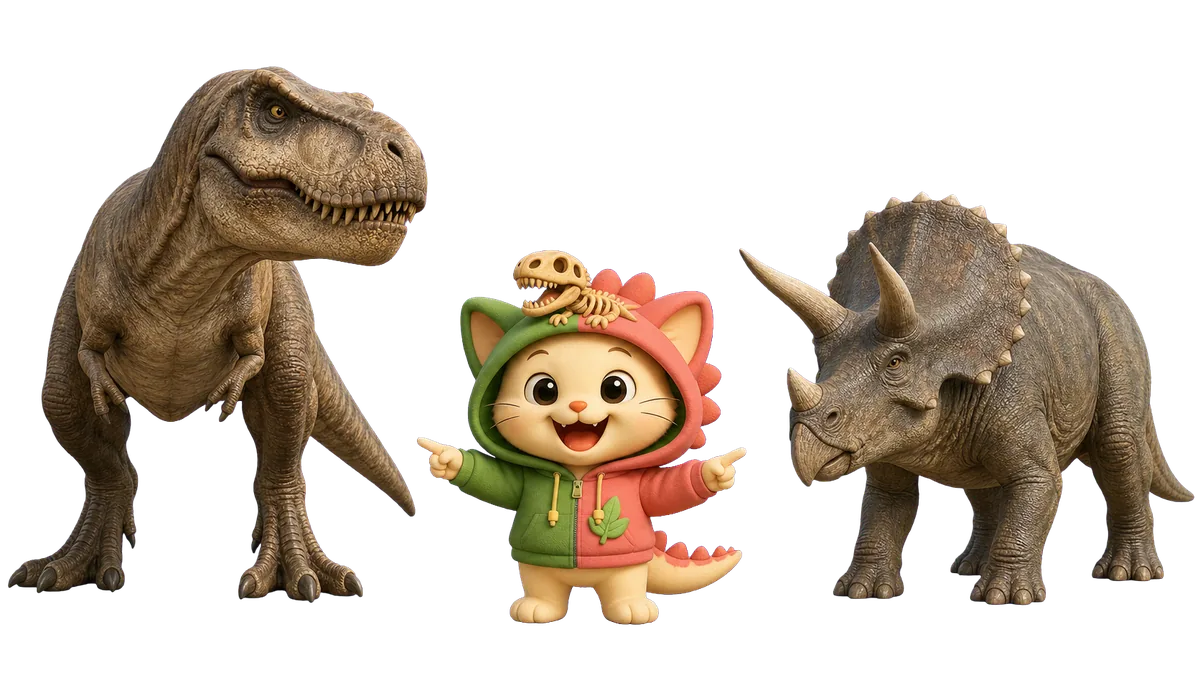
Try a paleontology game
- Partly cover three small objects with paper.
- Describe visible shapes and textures before guessing.
- Explain which clue supports the answer, then uncover it.
If the idea changes when new evidence appears, the investigation worked—just like science.
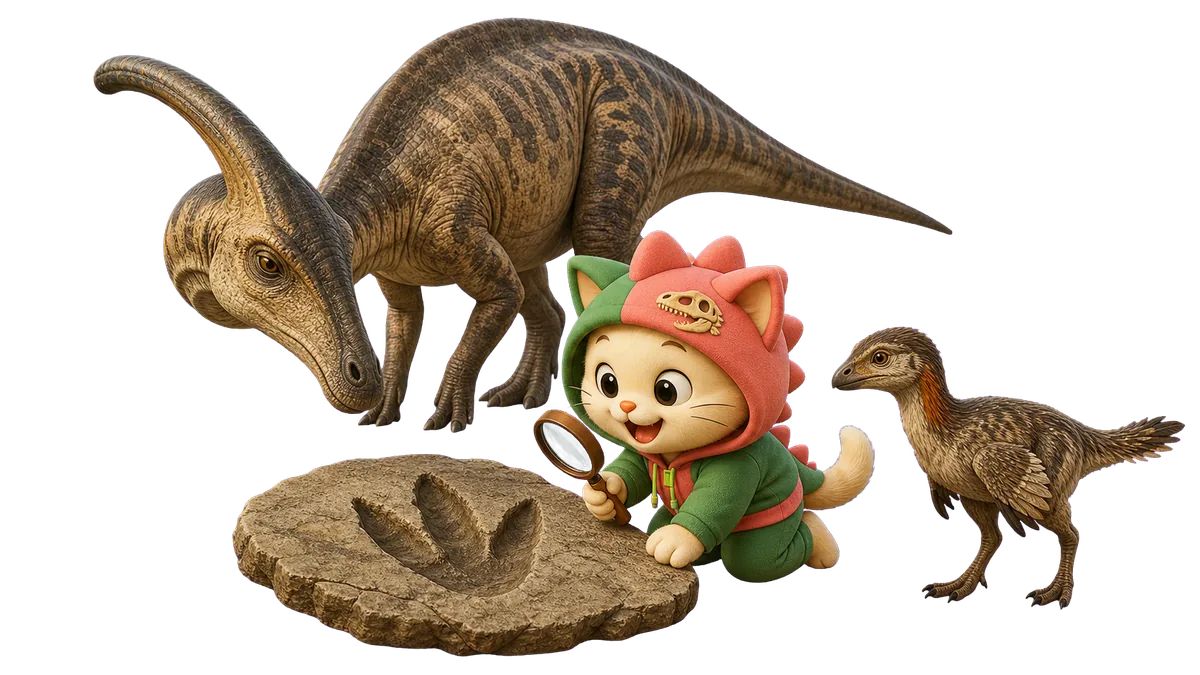
Quick dinosaur questions
Did people live with dinosaurs?
No. Non-avian dinosaurs disappeared long before modern humans.
Were pterosaurs dinosaurs?
No. They were related flying reptiles; birds are living dinosaurs.
Were there marine dinosaurs?
Famous prehistoric marine reptiles belonged to other groups.
Which dinosaur was biggest?
The answer is uncertain because many giant skeletons are incomplete.
Continue the expedition
Meet prehistoric giants in Kiwi’s dinosaur adventures, then design your own species on paper.
Dinosaurs belonged to changing ecosystems
Dinosaurs shared their environments with plants, insects, early mammals, turtles, crocodile relatives, pterosaurs, and marine reptiles. Rocks preserve clues about climate, rivers, forests, droughts, and volcanic activity. Looking at the whole ecosystem avoids a common mistake: treating every prehistoric animal as a dinosaur or placing species from different periods and continents together.
Continue with Kiwi’s dinosaur world
Watch the dinosaur compilation, meet the Spinosaurus, or explore the complete dinosaur video collection. Children can then sort species by diet, compare footprints, or make a field notebook that separates fossil evidence from artistic interpretation.
Sources and further exploration
- Smithsonian National Museum of Natural History: Dinosaurs & Fossils.
- Smithsonian Institution: Tyrannosaurus rex fact sheet.
- Natural History Museum, London: What are dinosaurs?.
Paleontology keeps developing. This guide distinguishes well-supported evidence from details that remain open to study.